
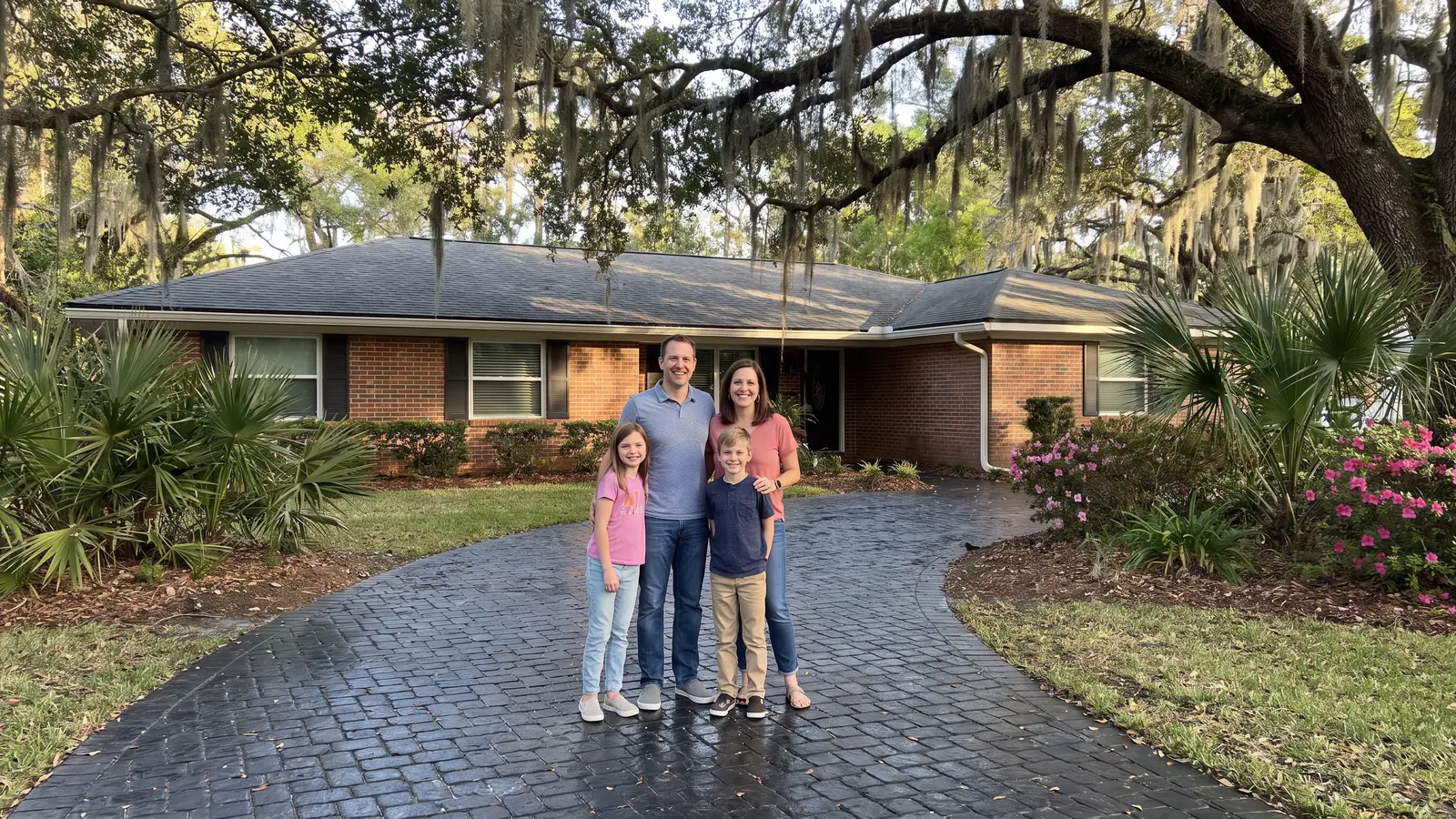
Paver sealing for Palm Valley homes
Paver Sealing in Palm Valley, FL
Palm Valley once shipped palm fronds north, and today its pavers get a free sealing estimate; call (904) 474-3568.
- Brings out deeper paver color
- Fresh joint sand helps lock pavers in place
- Gives weeds less room to grow
- Makes the surface easier to keep clean
- Free estimate, no obligation
Request a Free Estimate
Free, no obligation.
Fast, careful paver sealing in Palm Valley
Paver sealing in Palm Valley begins with a free estimate from a local contractor who washes, re-sands and seals driveways, lanai decks and walkways. Plan on a reply inside 1 business day, usually much sooner. To start, call (904) 474-3568. If your pavers sit behind a gate, mention it.
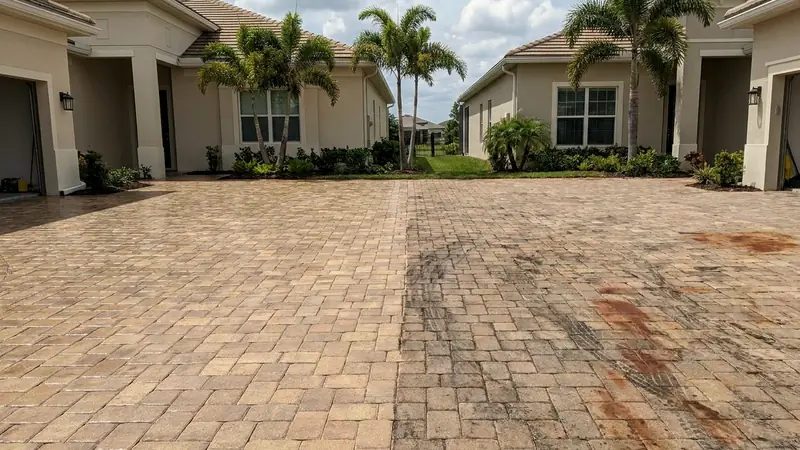
Picture a driveway gone chalky, with a green edge on the shaded side and joints thinning out. Washed, filled with new joint sand and sealed, the same surface reads as one steady color. Send a photo and ask for your free estimate. The estimate comes with no obligation, and you choose what happens next.
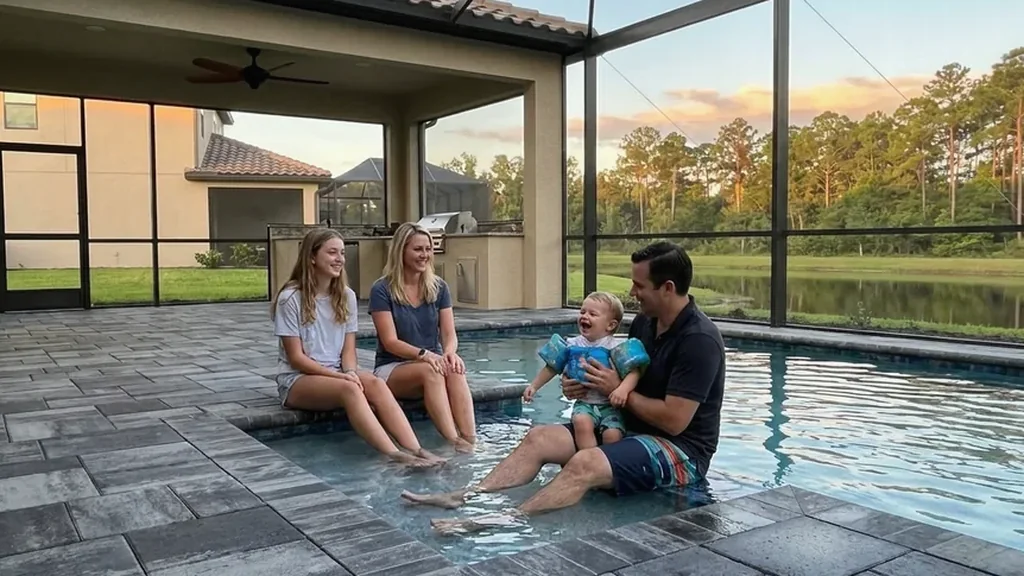
Why hire a local paver sealing contractor in Palm Valley?
Palm Valley sits between the Intracoastal and A1A, on ground that was marsh before the waterway was finished. A local paver contractor plans around that, and you can ask for your free estimate to hear how.
Quote first, decide later
Someone looks at your Palm Valley deck or drive and names a price. You owe nothing until you say yes.
Prices you can test
Quotes across the region commonly sit between $1.75 and $3.25 per square foot to clean, sand and seal. A number far outside that band deserves a question.
How the finish looks
Matte sits quietly beside a pool or a marsh view. Gloss deepens the color, and it also shows scuffs earlier.
Your timeline
The date, the finish and the go-ahead are all yours to set.
Get Your Free Estimate in Palm Valley
Tell us about your pavers in Palm Valley.
Free, no obligation
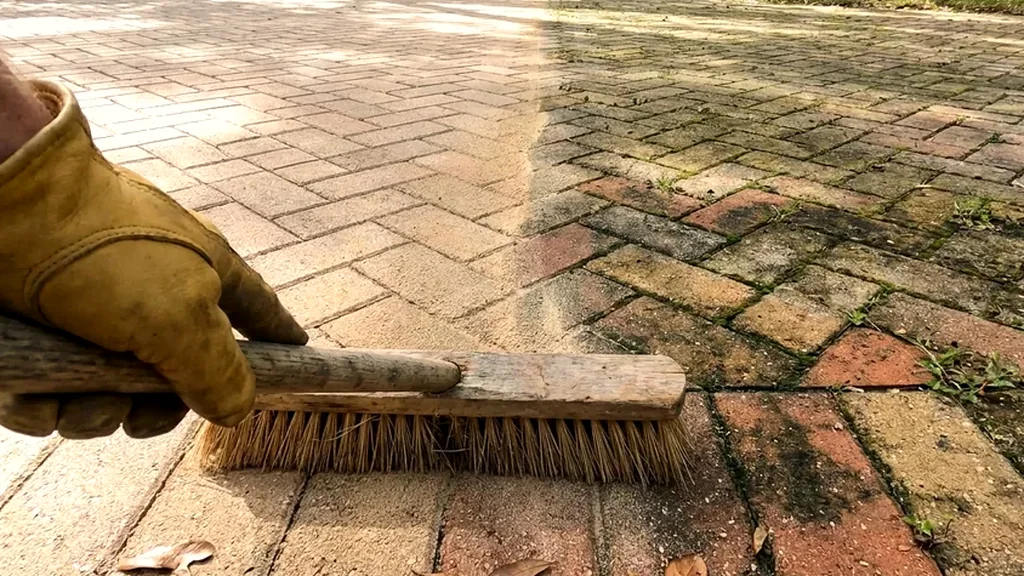
What paver problems show up most in Palm Valley?
Ground that was marsh not long ago
A state marker at the Palm Valley Community Center says finishing the Intracoastal Waterway in 1912 drained much of the marshland here. TPC Sawgrass was built in 1980 on swampland a mile from the ocean. Ground like that can stay soft and slow to dry. Sealer needs a dry surface, so a contractor may wait longer after rain than the top of the pavers suggests. Ask the contractor how the bed will be judged dry, since a surface that feels dry can still hold water below. Soft spots tend to show up as low pavers near drains and along edges, so those are the places the contractor presses and checks first. Walk the edges after a storm and note where water lingers.
A long humid season
Weather Spark, as cited on Wikipedia, puts Palm Valley's humid period at about 6.5 months, from April 26 to November 11. The wetter season runs from June 2 to October 2. That leaves a shorter run of dry days for sealing. Booking early and staying flexible on the date gives the contractor room to pick the right day. Late fall and spring often give the cleanest runs, though the forecast always has the final word. A short list of backup dates helps. Sticky air also slows drying after a wash, which is why a contractor may split the work into two visits.
Salt in the sea breeze
Within a couple of miles of salt water, the University of Florida says, people have likely seen salt spray hurt plants. A paver maker says salt crystallizes on surfaces as moisture dries and that pale pavers show marks sooner. Palm Valley sits west of A1A, close enough for that breeze. A wash lifts the film, and a coat makes the next one easier to rinse. Rinsing helps manage buildup in coastal regions, a paver maker says, and a sealed surface is easier to rinse. Tell the contractor if your pavers face the Intracoastal side.
Standing water after a hard rain
On October 7, 2026, Canal Boulevard was underwater from morning into the afternoon, and water lingered in yards into the evening. After Hurricane Irma, many homes along Roscoe Boulevard flooded from surge off the Intracoastal. Pavers that took water can hold silt and lose joint sand. Mention any flooding on your lot when you call. The county also reports surge of 2 to 7 feet from Matthew in 2016, which shows how much water this coast can move. If your street ponded, expect the contractor to inspect the joints along the low end of the drive closely. Old Palm Valley homes, built from 1993 to 1999, sit at a median elevation of 7 feet, a real estate guide says.
Pool decks with no dry time
More than 230 homes in Odom's Mill share a community pool, and many Palm Valley houses have their own deck or lanai. A St. Johns County paver company says pool surrounds need a different drying and application plan because shade, splash-out and constant moisture change prep and cure. Ask the contractor how a wet deck will be handled before the date is set. Grip matters too, so ask whether the sealer can carry an anti-slip additive. Chlorine and sunscreen leave marks on a deck, and the wash handles those before any coat. Counting condos and townhomes, about 2,500 housing units here sit in buildings of 3 to 19 units, so some decks and walks belong to an association.
Do Odom's Mill, Plantation Oaks and Palm Valley Landing need different paver work?
Often they do, since each was built in a different period. Plantation Oaks homes on the market were built from 1985 to 2006, and 14 of 15 sampled listings report an HOA. Odom's Mill has more than 230 single-family homes with a community pool. Tell the contractor your neighborhood when you ask for your free estimate.
The Census Bureau puts the median Palm Valley home at 1991, with about 6,000 of 9,800 housing units single-family detached and about 2,500 in buildings of 3 to 19 units. Pavers on a 1991 home may be on a second or third coat. Pavers beside a condo may belong to the association. Call (904) 474-3568 and say which type you have.
Seaside, Dolphin's Cove and the part of Sawgrass between A1A and the Intracoastal make up the rest. Sawgrass Players Club has a gatehouse at its A1A entrance, so access can matter. Florida law limits an association's review to what its rules state, so check your guidelines. Then ask for your free estimate.
What does paver sealing cost in Palm Valley?
Think of the price as area times a rate. Companies in this region commonly publish $1.75 to $3.25 per square foot to clean, sand and seal, and your lanai deck plus a long drive set the area. Shade growth and old sealer move the rate. To see your own figure, ask for your free estimate.
Some Palm Valley lots cost more to work. Soft, wet ground delays a start, a gated street slows arrival, and a pool deck may need extra grip in the sealer. None of this is a surprise if you mention it early. Call (904) 474-3568 and run through your lot with the contractor.
| Paved area | Typical example | Clean, sand and seal |
|---|---|---|
| 300 sq ft | Small patio or walkway | $525 to $975 |
| 600 sq ft | Two car driveway | $1,050 to $1,950 |
| 1,000 sq ft | Large driveway or pool deck | $1,750 to $3,250 |
| 1,500 sq ft | Driveway plus pool deck | $2,625 to $4,875 |
Math based on the $1.75 to $3.25 per square foot that Northeast Florida paver companies published as of November 2026. Your contractor sets the actual price after seeing the surface. Repairs, leveling and stripping failed sealer are usually extra.
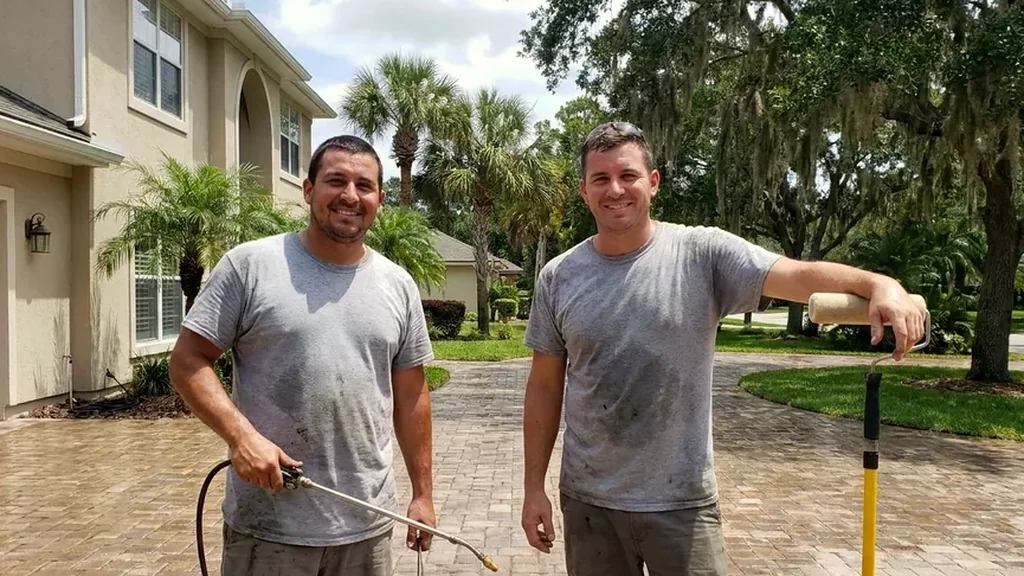
How does a paver sealing job work in Palm Valley?
Check the base and what is on it
Before any water flows, the contractor walks the property. Soft spots, standing water and sunken pavers are noted, because sealing locks in whatever is there. An older coat is identified too, since a water-based coat will not go over a solvent-based one. Say if water has ever pooled on your lot, and point out the sprinkler heads. A quick sketch of where sprinklers and drains sit helps the plan.
Rinse away salt and green edges
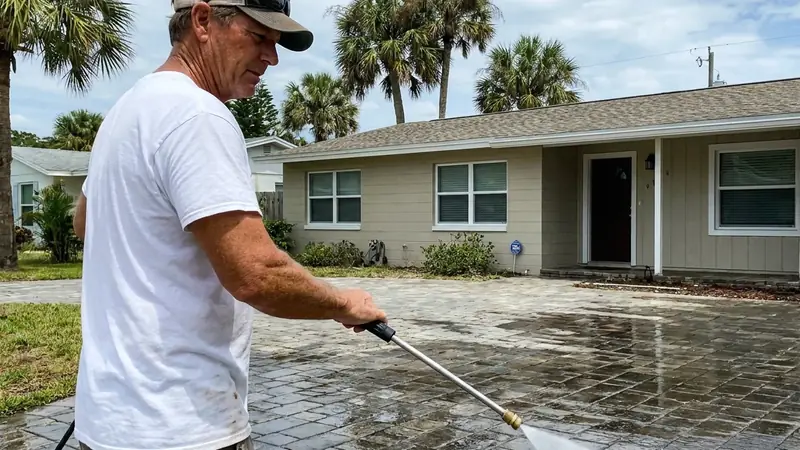
The wash lifts salt film and green growth from shaded edges. Pressure is chosen for the paver, because too much can scar the face. Screens, doors and plants are shielded from spray. On a pool deck, rinse water stays out of the pool, and stubborn rust may need more than one pass. Moss or algae on shaded edges is treated at this stage.
Pack the joints again
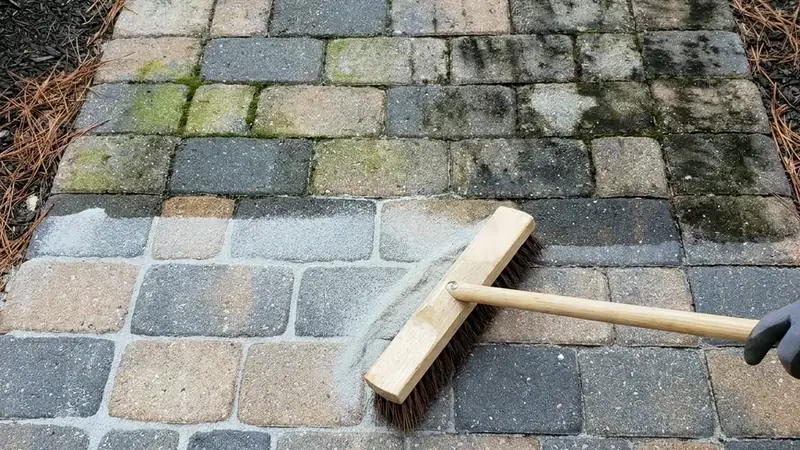
Washing carries joint sand away, so the joints are packed again before sealing. Full joints hold weeds off and keep pavers snug against their neighbors. If the sand has been thin for years, this step takes a while. Matching the sand to the paver color keeps the finished lines tidy.
Wait for dry pavers
Drying is the step that cannot be hurried. Sealer needs a dry surface, and a damp paver can turn the coat cloudy. Here the humid stretch runs from late April into November, and shaded lanai floors lag behind sunny drives. Patience on this day protects the finish for years. Ask how the contractor will confirm the pavers are dry before starting.
Spray, roll and cure
Last, the coat is sprayed on and then worked into the joints with a roller. Acrylic costs less but may scratch more easily, while polyurethane is tougher and costs more. Expect a quoted two to five years before the next coat is due. People can usually step on it after hours, and cars wait about a day. Ask which product went on and keep the name for next time.
Complete paver services in Palm Valley
Start with the ground, because in Palm Valley it sets the pace. The Intracoastal drained marshland here, and a damp bed can hold a job up for days. Once the pavers are dry, the wash, the new sand and the coat follow in that order. Call (904) 474-3568 to hear how long each part would run on your lot.
Palm Valley pavers live in three places: the driveway, the pool deck and the walk to the door. Drives take tires and salt breeze, decks take splash and sunscreen, and walks go green along the shaded edge. Each wears differently, so each gets its own plan. Say which you have when you ask for your free estimate.
Pick the sealer in two steps. First the old coat rules out some products, and then you choose how shiny the finish should be. Acrylics cost less but can scratch, while polyurethanes are tougher and cost more. For a quick talk through the options, call (904) 474-3568.
Plan the calendar around humidity rather than the month. April to November is sticky, and June to early October is the wettest stretch. A clear spell in late fall or spring often gives a better chance. To find a date that fits your street, ask for your free estimate.
Questions to ask before you hire
- Can you lift the tar spots and chewing gum off my pavers before you seal?
- How far back from my lawn edge and mulch beds do you stop the sealer?
- How do you keep grass clippings and dust off the wet coat on a windy day?
- My pavers are two colors, so will the sealer treat both the same way?
- Could you price only the front half of the driveway to start?
- What should I look for when I walk the job afterward to know it was done right?
- How do you handle a job where a big shade tree keeps the pavers damp until noon?
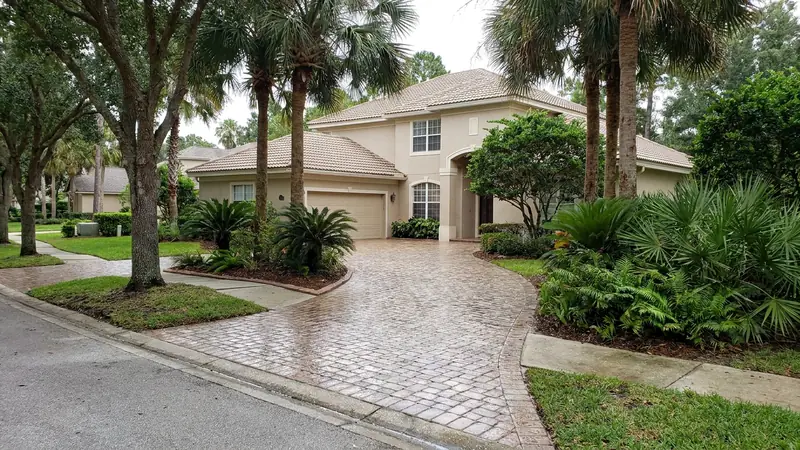
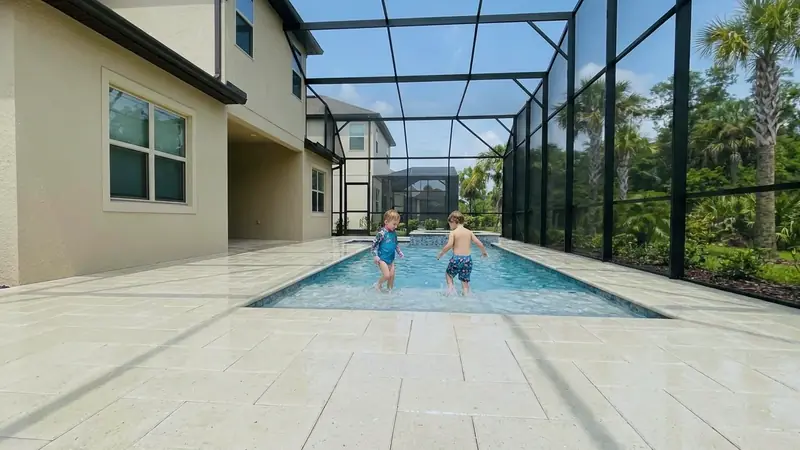
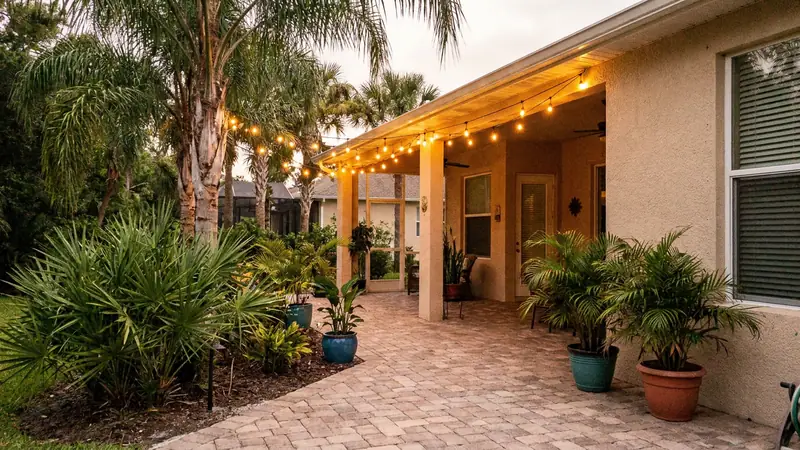
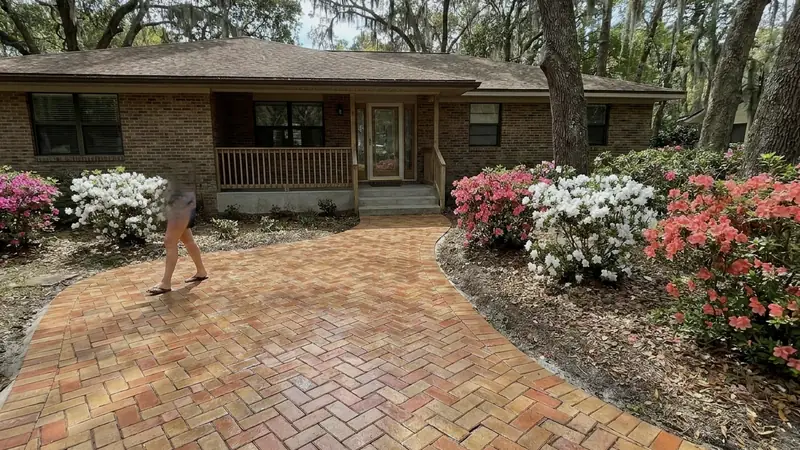
What do sealed pavers look like around Palm Valley?
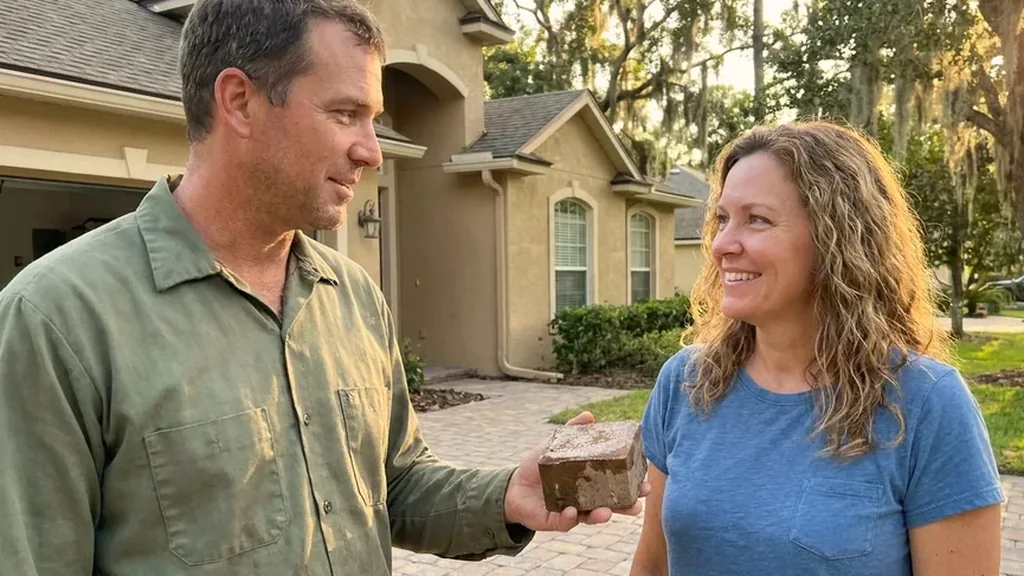
Why local matters in Palm Valley
Someone who works Palm Valley already knows the ground was marsh until the waterway was finished in 1912. That history explains why beds stay damp and why drying takes patience. A contractor from a drier town may plan too short a window. To talk with one who knows the Intracoastal side, call (904) 474-3568.
Local contractors also remember where water has gone. Canal Boulevard flooded in October 2026, and Roscoe Boulevard took surge from the Intracoastal after Irma. Those streets teach a contractor to ask about flooding before quoting. If your lot has held water, ask for your free estimate and say so.
Many neighborhoods here carry an HOA or a gate. A contractor who has done the work in the area asks about both before booking, which saves a wasted trip. Not sure who to ask in your community? ask for your free estimate and name your neighborhood.
How did Palm Valley go from marsh and palm fronds to a coastal neighborhood?
The Intracoastal Waterway did most of the work. A state marker says the waterway opened in 1912 and that finishing it through Palm Valley drained much of the marshland. A canal dug in 1908 linked the San Pablo and Tolomato Rivers, and the name changed from Diego Plains to Palm Valley in 1906. Near the Community Center on Canal Boulevard, call (904) 474-3568.
Families once cut and shipped about 400,000 palm fronds a year to churches up north. Palm Valley Road, once a dirt road, now carries heavy traffic and a fixed four-lane bridge, built in 2002, crosses the Intracoastal. The Community Center at 148 Canal Boulevard marked 75 years in 2023. Near any of these Palm Valley landmarks, you can ask for your free estimate.
Frequently Asked Questions
Is it good to seal pavers in Florida, and does it help in Palm Valley?
Yes, for most driveways and pool decks. Sealed pavers shed dirt and salt film more easily, keep their joint sand and hold their color longer. Humid months are hard on bare pavers, so a fresh coat helps in Palm Valley. A free estimate shows whether your coat is due. The median Palm Valley home dates to 1991, so many pavers here are decades old.
What is the average cost to seal pavers in Palm Valley?
Companies commonly publish $1.75 to $3.25 per square foot for cleaning, sanding and sealing in this region. A Palm Valley job moves inside that range with shade, old sealer and size. Ask that the total area appear in the quote, then compare it with the range. A job that needs old sealer stripped sits higher in that range.
Is it better to spray or roll paver sealer?
One Jacksonville company says pros typically spray the sealer and then back-roll it so it reaches the joints and evens out. Ask the contractor how the coat will go on and which product is being used on your pavers. Aim for a thin, even coat, not a rushed one. Pool decks may get a different product than a driveway. Pool decks may get a different product than a driveway.
Should you seal pavers after power washing?
Yes, once they are fully dry. Washing removes joint sand, so new sand goes in first, and then the sealer goes onto a clean, dry surface. Damp pavers are a common reason a coat turns cloudy. Ask the contractor how long to wait after the wash before the coat goes on.
How long does paver sealer last in Palm Valley?
The usual quoted life of a coat is two to five years. Salt breeze, sun and car traffic pull toward the short end. If water beads, the coat still works. If water soaks in and darkens the paver, it is spent.
Can Palm Valley pavers be sealed after standing water?
Yes, after they are clean and fully dry. After a flood like October 2026 on Canal Boulevard, the contractor washes off silt and refills joint sand first. Point out low spots on your lot at the first visit. Check the base too, since soft ground can settle after high water. Ask the contractor to check the joints near the low end of the drive. Ask the contractor to check the joints near the low end of the drive.
Does Palm Valley's long humid season rule out paver sealing?
No, but it narrows the choices. Weather Spark puts the humid stretch from April 26 to November 11, so the contractor waits for a dry surface. A clear spell in late fall or spring often works, and a few backup dates keep a rain delay short.
What happens if it rains right after the sealer goes on?
A fresh coat needs time to cure, so rain soon after can leave marks or haze. That is why the contractor watches the forecast and may move the date. Ask how long the coat needs before rain is acceptable, and keep sprinklers off until it is ready.
Ready for a Free Estimate in Palm Valley?
Call (904) 474-3568 and tell us about your pavers.
Free, no obligation