
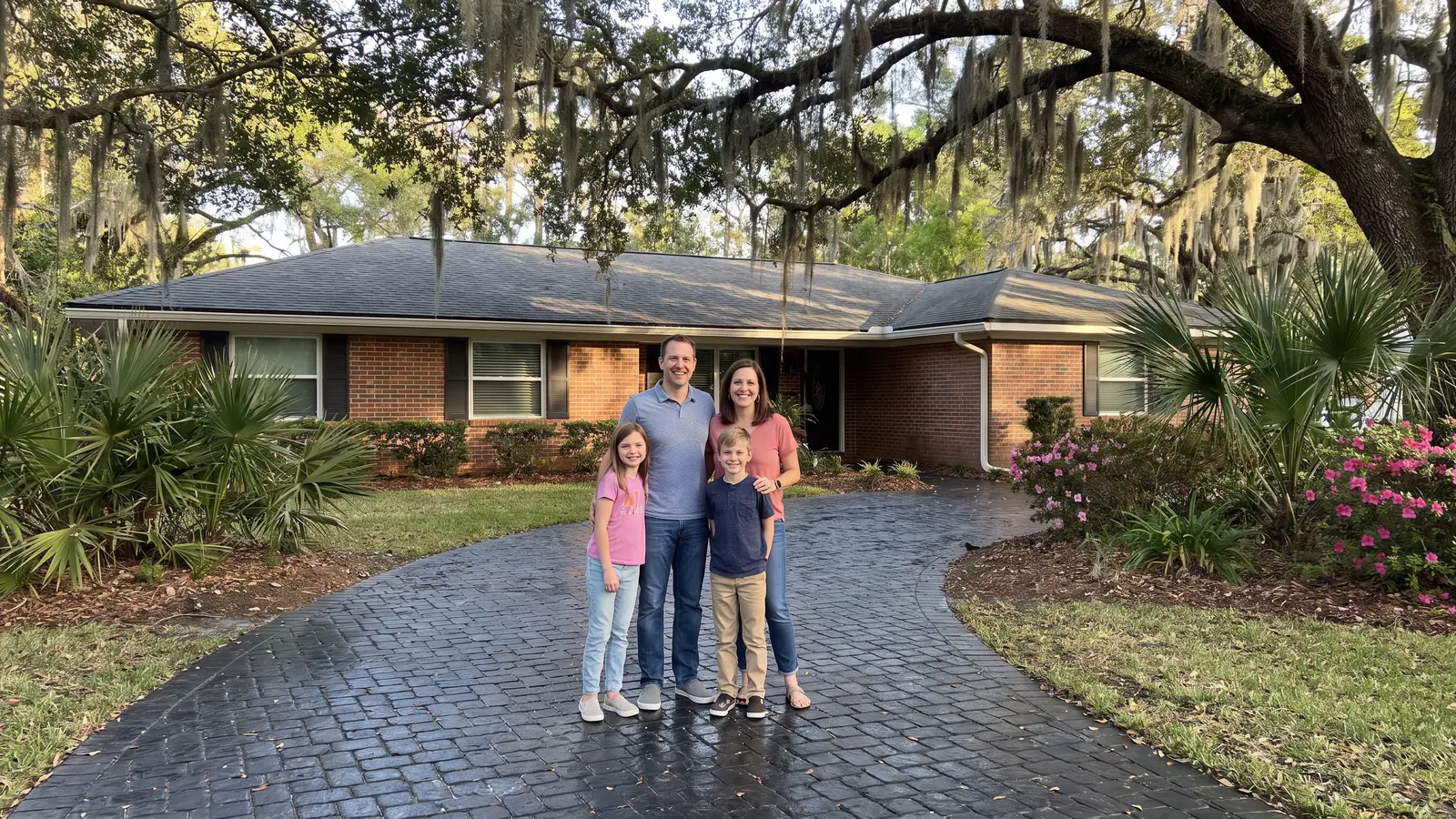
Paver sealing for Fleming Island homes
Paver Sealing in Fleming Island, FL
Fleming Island homes go back to 1989, so call (904) 474-3568 for a free sealing estimate on pavers that have aged.
- Brings out deeper paver color
- Fresh joint sand helps lock pavers in place
- Gives weeds less room to grow
- Makes the surface easier to keep clean
- Free estimate, no obligation
Request a Free Estimate
Free, no obligation.
Fast, careful paver sealing in Fleming Island
Paver sealing on Fleming Island comes with a free estimate from a local contractor who washes, re-sands and seals driveways, pool decks and walkways. The reply comes within 1 business day, and usually much sooner than that. To start, call (904) 474-3568.
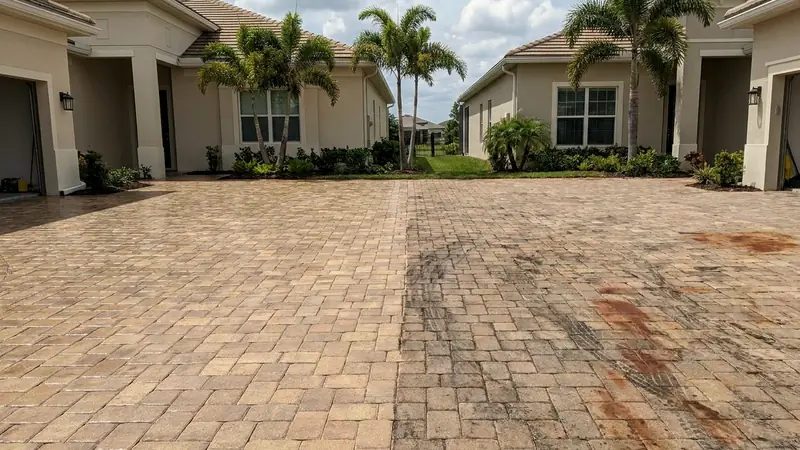
Maybe the drive to your garage has gone gray, with black mildew where the sprinklers land and acorn spots under the oaks. Once it is washed, re-sanded and sealed, the drive looks like one color again. Send a few photos and ask for your free estimate, with no obligation to hire anyone. Even a rough square footage helps the contractor quote.
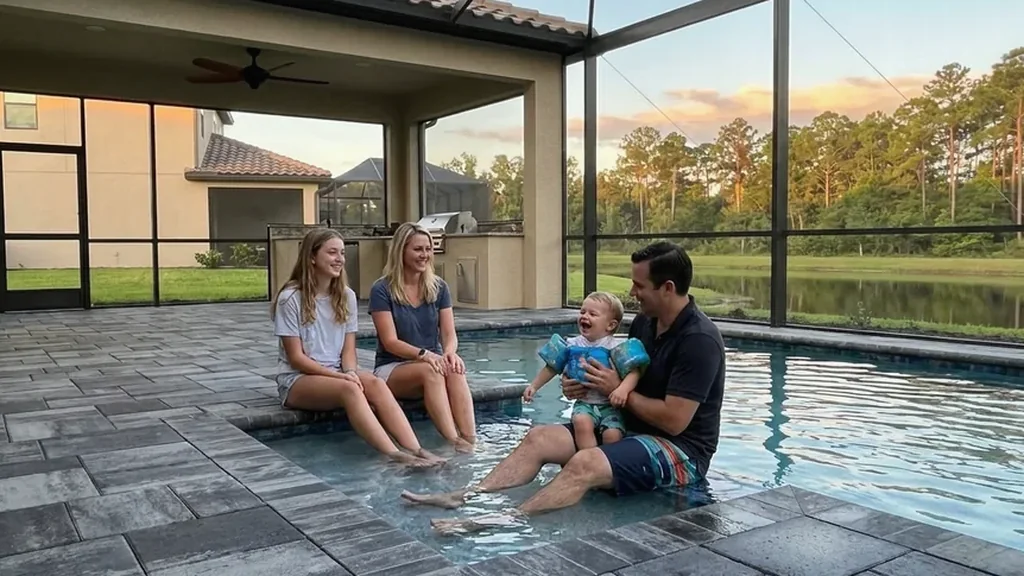
Why hire a local paver sealing contractor in Fleming Island?
Fleming Island has water on every side and neighborhoods that are decades old, so a local paver contractor knows what the ground and the tree cover do to a driveway. ask for your free estimate to hear how that applies to your street.
A free look first
Someone checks your Fleming Island driveway, patio or pool deck, then quotes a price. The visit carries no obligation.
A band to compare
Published prices in this area run $1.75 to $3.25 per square foot for cleaning, sanding and sealing. Measure any bid against that band.
Pick the look
Quiet matte suits brick and stucco. A wet look adds depth in the sun, though tire marks show sooner.
Nothing rushed
You set the date and the finish, and you can still say no after the estimate.
Get Your Free Estimate in Fleming Island
Tell us about your pavers in Fleming Island.
Free, no obligation
What paver problems show up most in Fleming Island?
Creek water and storm surge
After Hurricane Irma in 2017, Black Creek rose to 28.5 feet, above a record set in 1919, and surge broke docks on Doctors Lake. Nicole in 2022 brought another three to four feet of surge and flooding at Black Creek. Pavers that sat in that water can hold a layer of silt and lose joint sand. Sealer would trap the silt, so the wash has to come first. If your street took water in either storm, mention it at the first visit. The contractor can then plan extra rinsing and a closer look at the joints near the low end of the drive. Eagle Harbor homes sit at a median elevation of 16 feet, so exposure differs from lot to lot. Tell the contractor your street so the plan fits.
Sprinkler rust and black mildew
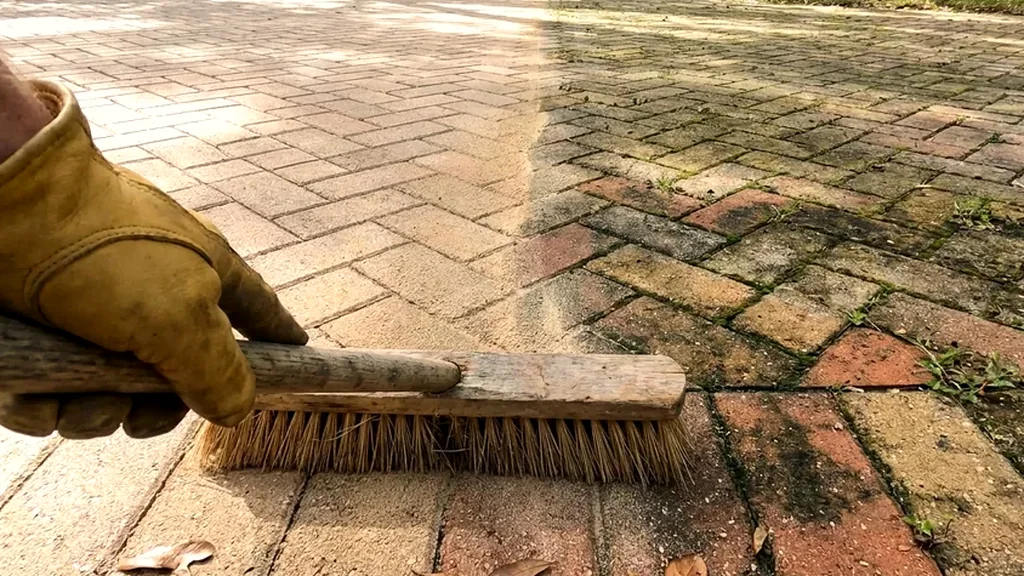
Extension specialists at the University of Florida note that iron-rich well water, when used for irrigation, often leaves orange stains. A Jacksonville paver company adds that shaded, sprinkler-hit pavers grow black mildew fast. If your Fleming Island driveway gets spray every morning, look for rust lines and dark patches near the edges. Both need treating before sealer goes on. Turning spray heads away from the pavers, or asking your landscaper to do it, keeps new marks from forming after the cleaning. Mulch beds and siding take the same spray, so turning heads away helps the whole yard. Black mildew shows first on the shaded edge of the drive.
Acorns and leaf tannins under mature oaks
A Clay County paver company says mature tree canopy, leaf tannins and irrigation all play on Fleming Island hardscapes. UF/IFAS says water oak acorns stain concrete where they fall, and laurel oak leaves hang on until early spring. That means a street with big oaks can see stains for months. Cleaning clears most of it, though a few spots may stay faint. Spring is the heavy season for laurel oak leaves, so a driveway can look clean in March and dull again by May. Water oak acorns are prolific, UF/IFAS says, so one tree can mark a whole driveway.
Pavers that are 15 or 20 years old
Development here began in 1992, and Pace Island opened its first home in 1989. One Jacksonville-area company says many Fleming Island drives have been down fifteen or twenty years, so much of the work is restoration. Visible white aggregate means the surface has decayed. Fresh sealer helps pavers that are worn, but it cannot replace pavers that are already crumbling. A free look tells you whether the pavers need a simple reseal or a repair first. Tell the contractor about any low spots, since sealing preserves a dip as it finds it. Eagle Harbor homes on the market were built from 1993 to 2010, so some drives there have a long coat history.
Screened pool decks and slick finishes
Screened pool decks stay shaded and damp, and sunscreen, furniture and chlorine all leave their marks. A Jacksonville company says pool decks need an anti-slip additive, and another says most local pool decks get a penetrating sealer that keeps traction when wet. Ask about grip before you pick any gloss. A shiny finish near water is the wrong place to guess. If you swim most of the year, tell the contractor how often the deck gets wet, because that changes the drying plan. A deck beside a pond or the lake can stay shaded for hours, so ask when the sun reaches it.
Do Eagle Harbor, Pace Island and Fleming Island Plantation need different paver work?
Often yes, because each was built in a different wave. Pace Island's first resident moved in just before Christmas 1989, and Eagle Harbor homes on the market were built from 1993 to 2010. Fleming Island Plantation was approved in 1998 with room for 3,790 homes. Tell the contractor your neighborhood and the year your house was built when you ask for your free estimate.
Eagle Harbor was the first big golf development between Orange Park and Green Cove Springs, with a 22-acre nature preserve and a waterfront park on Doctors Lake. It had 2,225 homes by February 2004, and every sampled listing there reports an HOA. Pavers on those older lots may carry more than one coat. Call (904) 474-3568 and ask how the contractor reads a long coat history.
Pace Island sits on Doctors Lake, and eight ponds were dug there. A Clay County paver company points to humidity near the water as a Fleming Island trait. Florida law lets an HOA board hold owners to a unified look, so check your rules before choosing a color-changing finish. Then ask for your free estimate.
What does paver sealing cost in Fleming Island?
Fleming Island driveways tend to be wide, and many homes have screened pool decks, so area drives the total. Published numbers here commonly run $1.75 to $3.25 per square foot to clean, sand and seal. Each job is priced after the joints are inspected. To get a number for yours, ask for your free estimate.
Three things swing the price most: old sealer that has to be stripped, mildew and rust that need extra washing, and the hours of prep behind each hour of sealing. According to one Jacksonville company, every hour of sealing follows two to three hours of prep. Call (904) 474-3568 and the contractor can sort out which apply to your lot.
| Paved area | Typical example | Clean, sand and seal |
|---|---|---|
| 300 sq ft | Small patio or walkway | $525 to $975 |
| 600 sq ft | Two car driveway | $1,050 to $1,950 |
| 1,000 sq ft | Large driveway or pool deck | $1,750 to $3,250 |
| 1,500 sq ft | Driveway plus pool deck | $2,625 to $4,875 |
Math based on the $1.75 to $3.25 per square foot that Northeast Florida paver companies published as of November 2026. Your contractor sets the actual price after seeing the surface. Repairs, leveling and stripping failed sealer are usually extra.
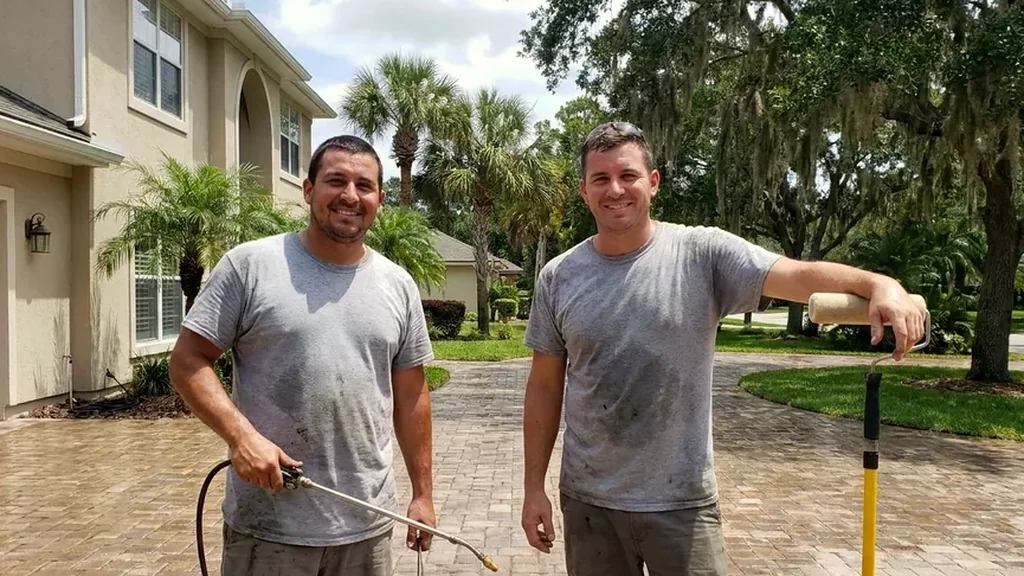
How does a paver sealing job work in Fleming Island?
Read the surface and its history
The visit starts on foot. The contractor looks at shade, sprinkler spray and runoff, resets sunken or lifted spots, and checks for an earlier coat, because a water-based product cannot be put over a solvent-based one. If Black Creek or Doctors Lake ever reached your lot, say so now. A quick sketch of your sprinkler zones helps the plan. Photos of problem spots taken in daylight make the visit quicker.
Clear mildew, stains and silt
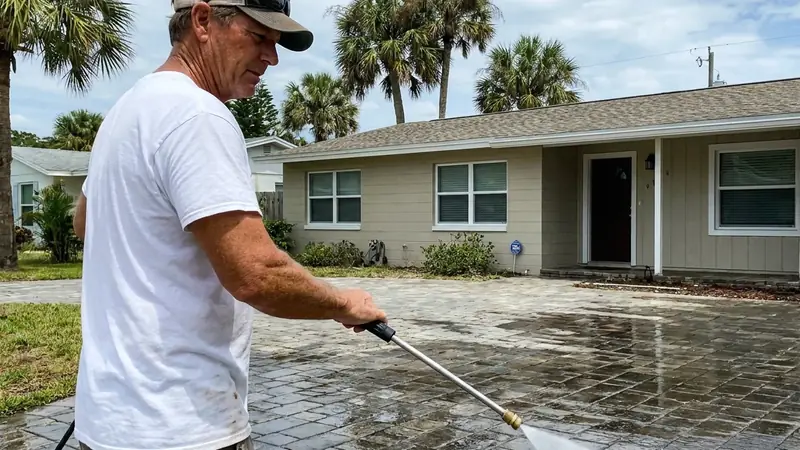
Next the surface is washed for black mildew, leaf tannins and silt left by high water. Rust from irrigation is treated here, although some deep rust or oil will not come out completely. Rinse water stays off screens and landscaping, and pool decks get pressure matched to the surface. Furniture and plants are moved or covered first. Some stains need a second pass.
Re-sand the joints
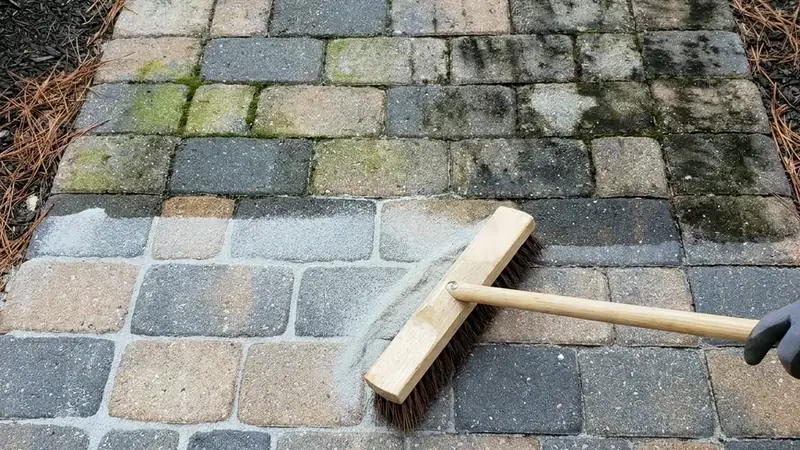
Cleaning pulls joint sand out, so fresh sand goes back before any coat. The USDA describes the Penney soil series, first mapped in Clay County, as excessively drained sand, which is why joints empty quickly on sandy lots. Full joints keep weeds out and hold pavers snug. If the sand has been low for years, expect this stage to run longer than the wash. Joints along the drive edge are checked first, since they lose sand first.
Let the pavers dry
Then comes the wait. Sealer needs a dry surface, and nearly every white, cloudy coat traces to damp pavers. Humidity near the water and shaded screened decks slow drying, so the contractor reads the forecast and holds off instead of hurrying. Hurricane season runs June 1 to November 30, so a storm watch can move the date. A screened deck may need extra drying time.
Spray and back-roll the coat
The coat goes on by spray and is back-rolled so it reaches into the joints. The wet look gives deeper color, though scuffs show sooner than on matte. Quoted spans between coats commonly run two to five years. One Jacksonville company says foot traffic is fine after 2 to 4 hours and cars after 24. Sprinklers stay off the fresh coat until the contractor gives the word. Keep pets and bikes off until the contractor gives the all-clear.
Complete paver services in Fleming Island
On Fleming Island the order of work never changes: wash, new sand, a pause to dry, then the coat. Nothing dirty gets sealed in, and each stage has its own timing. Call (904) 474-3568 to ask how long each would take on your lot. Screened decks follow the same order, with rinse water kept out of the pool.
Different surfaces age in different ways here. Broad driveways take tires and morning sprinkler spray, screened pool decks stay damp and pick up sunscreen marks, and walks under oaks collect tannin stains. List what you have when you ask for your free estimate. A short list is enough.
Choosing a sealer is partly chemistry and partly taste. An old coat decides whether water-based or solvent-based can go on. Pool decks often get a penetrating product that keeps grip, while drives may take a film finish in matte or wet look. Call (904) 474-3568 to talk through your options.
Fleming Island weather decides the date more than the calendar does. Sealing waits for a dry surface, and hurricane season runs June 1 to November 30. Pavers near Doctors Lake or Black Creek can stay damp longer than pavers farther from the water. To find a date for your street, ask for your free estimate.
Questions to ask before you hire
- Can you start after the school drop-off and finish before my kids are home?
- Can you point out the spots that will probably need a touch-up in a year or two?
- How do you handle a job where a big shade tree keeps the pavers damp until noon?
- How far back from my lawn edge and mulch beds do you stop the sealer?
- My pavers are two colors, so will the sealer treat both the same way?
- How does the cured sealer feel underfoot compared with bare pavers?
- Can you lift the tar spots and chewing gum off my pavers before you seal?
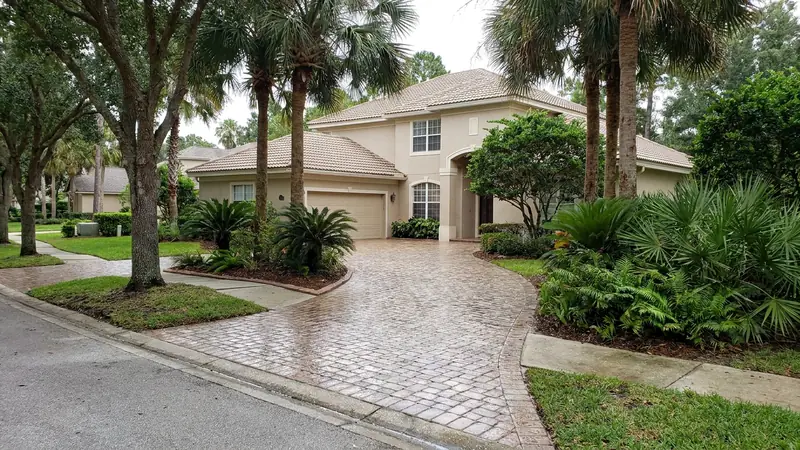
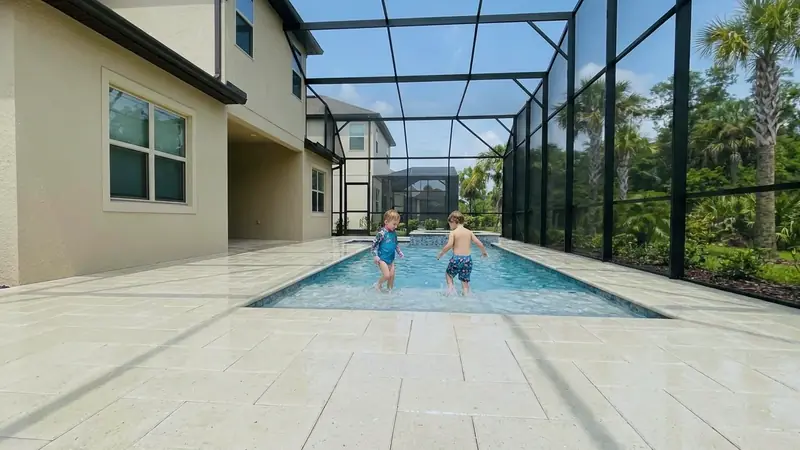
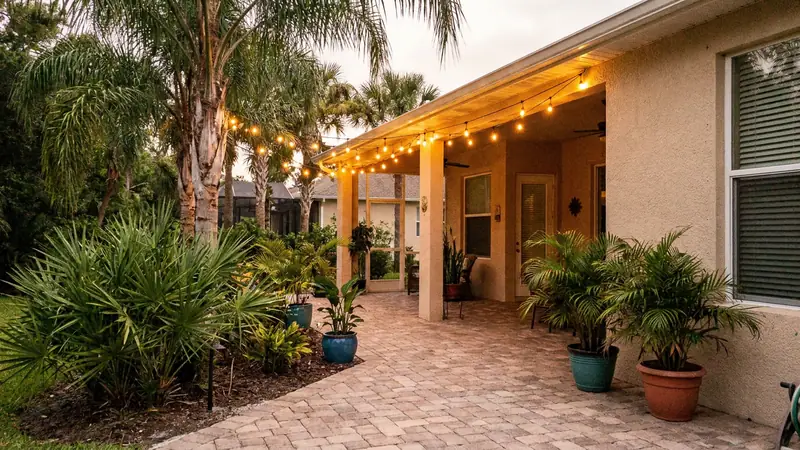
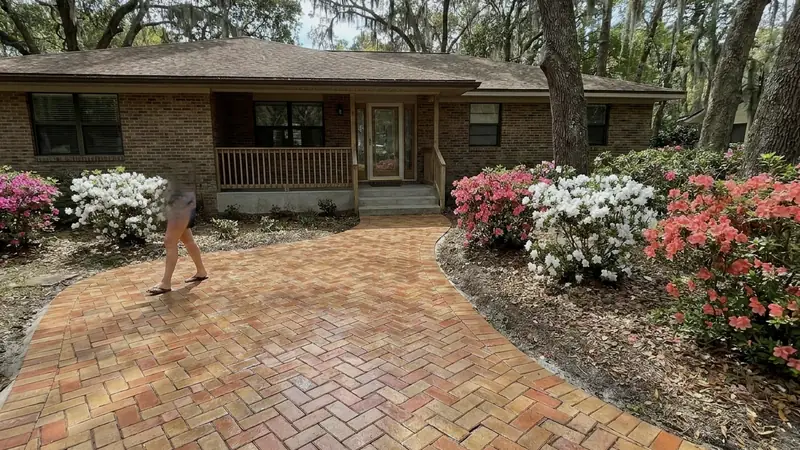
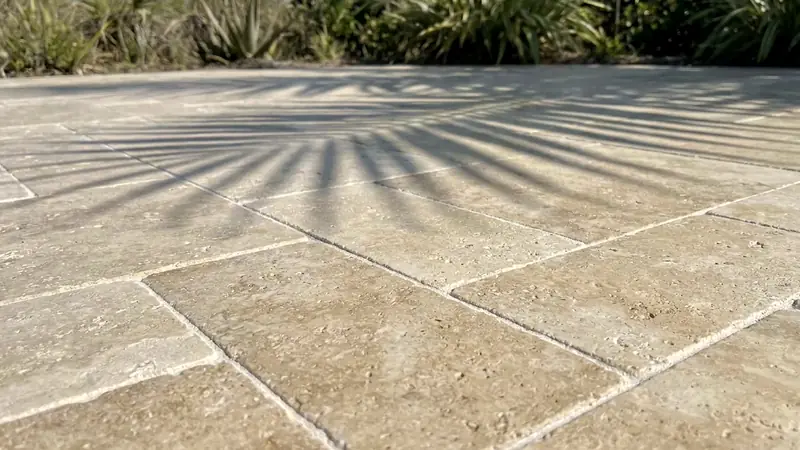
What do sealed pavers look like around Fleming Island?
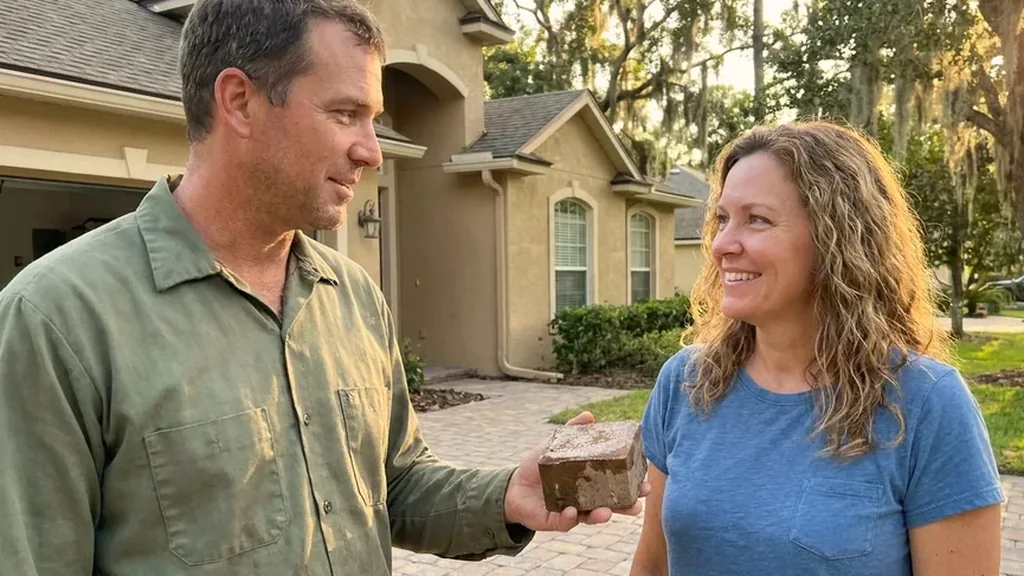
Why local matters in Fleming Island
Ask a contractor who works Fleming Island whether Black Creek or Doctors Lake ever reached your lot. That one question tells how much silt must come out before any sealer. Someone from out of the area may never raise it. For a contractor who serves Clay County, call (904) 474-3568.
Lawns matter too. Many yards here are watered from a well or a lake pump, and iron leaves orange lines where the spray lands. A local contractor plans a rust treatment ahead of the coat. If you want to know how rust gets treated, ask for your free estimate and ask.
Rules differ by community, from Pace Island to Eagle Harbor to Fleming Island Plantation. Someone who has worked the island knows to ask about the HOA and street parking before setting a start date. That saves a morning of calls. If you are unsure what your rules say, ask for your free estimate and mention your neighborhood.
Does Fleming Island's history matter when sealing pavers here?
Not directly, but it explains the land you are working with. Irish settler George Fleming started a plantation called Hibernia in 1790, and St. Margaret's Episcopal Church, built from 1875 to 1878 in Hibernia, joined the National Register in 1973. Near that old Hibernia area, call (904) 474-3568 and name your street. The church stands at 6874 Old Church Road.
The Navy built four runways here in 1942 as an outlying airfield, and the decaying runways were demolished in the late 1990s for housing. Today an 8-foot sidewalk runs about 7 miles along the island, with Black Creek Park at the south end and Moccasin Slough at the north. Near any of these Fleming Island landmarks, you can ask for your free estimate. Black Creek Park, at the south end, has nature trails.
Frequently Asked Questions
Is it good to seal pavers in Florida, and is it worth it on Fleming Island?
For most driveways and pool decks, yes. Sealer helps keep dirt on top, holds the joint sand in place and restores color the sun has taken. Sprinklers, oak stains and humid air all show up on Fleming Island pavers, so a fresh coat pays off. A free estimate will say whether your coat is due. Development began in 1992, so many pavers have been through decades of Florida weather.
How long do paver sealers last on Fleming Island?
Two to five years is the span you will commonly hear quoted. Heavy shade, daily car traffic and full sun can shorten that. Water that beads on the surface means the coat is still working, and water that soaks in and darkens the paver means it is done.
What is the average cost to seal pavers on Fleming Island?
Companies in this region commonly publish $1.75 to $3.25 per square foot for cleaning, sanding and sealing. Shade growth, old sealer and size move a Fleming Island job inside that band. Have the quote list the total area, so bids can be compared fairly. Screened pool decks and wide drives raise the area quickly.
Is it better to spray or roll paver sealer?
One Jacksonville company says pros typically do both: spray the sealer on, then back-roll it. The roller pushes the coat into the joints and evens the finish. Ask how the coat will go on and which product is being used. A thin, even coat matters more than speed.
Which paver sealer works for Florida homes on Fleming Island?
That depends on the surface and the coat already there. A water-based product cannot be put over a solvent-based one, so the contractor checks first. Pool decks often take a penetrating sealer that keeps grip, and driveways may take a film finish in matte or wet look.
Can my Fleming Island pavers be sealed after a flood?
Yes, after the washing is done and the pavers are fully dry. When creek or lake water has reached the lot, silt comes off first and joint sand is replaced. Point out low spots at the first visit, since that is where silt and sand loss show most.
Why do my Fleming Island pavers grow black mildew so fast?
Shade and moisture feed it. A Jacksonville company says shaded, sprinkler-hit pavers grow black mildew fast, and a Clay County company points to humidity near the water and irrigation on Fleming Island. A wash clears it, and sealed pavers are easier to keep clean afterward.
Will sealing remove rust and acorn stains from my pavers?
No, cleaning does that, and sealing comes after. Some deep rust or oil may not come out completely. The coat then slows new stains from soaking in, so later marks are easier to clean.
Ready for a Free Estimate in Fleming Island?
Call (904) 474-3568 and tell us about your pavers.
Free, no obligation